You’re missing a tooth. Maybe it’s been gone for a while. Maybe it just happened. Either way, you’re looking at options and the price tag on dental implants made you pause. It’s a fair reaction. Dental implants cost more upfront than other options. But when you look at the long-term picture, they often end up being the better investment.
Let’s break it down without the sales pitch.
The Real Cost of “Cheaper” Options
A partial denture or a bridge usually costs less at the start. But that’s not the whole story. Bridges require shaving down two perfectly healthy teeth to act as anchors. Those teeth are now committed for life. They’ll need crowns. Those crowns will need replacement every 10 to 15 years. Each time, a little more tooth structure is lost.
Partial dentures are removable. They can feel bulky. They can slip. And they don’t stop bone loss. Many patients find themselves replacing them every few years as they wear out or as teeth shift. Over 10 or 20 years, those replacement costs add up. So does the cost of treating new problems that pop up because adjacent teeth got damaged or bone continued to shrink.
When you add it all together, implants often cost about the same as a bridge over a lifetime. You just pay for the implant differently: more now, less later.
What Makes Dental Implants Different
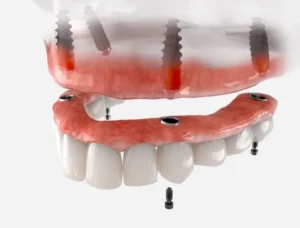
A dental implant replaces the whole tooth. Not just the crown you see, but the root underneath. That tiny titanium post fuses with your jawbone through a process called osseointegration. Your bone actually grows around it and holds it tight. That fusion is what changes everything.
- Implants stop bone loss. Your jawbone shrinks after you lose a tooth. An implant stimulates that bone just like a natural root. Your bone stays dense and strong.
- Implants protect your other teeth. No drilling on healthy teeth. No grinding down natural structure. Your neighboring teeth stay completely untouched.
- Implants last. With good care, implants can last 20, 30, even 40 years or more. The crown on top may need replacement eventually, but the implant itself is built to stay.
What Patients Say About Implants
Dental professionals can talk all day about bone density and success rates. But patients usually care about something simpler: how does it feel?
Here’s what patients consistently tell us. After they get an implant, they forget it’s there. It feels like their own tooth. Chewing feels normal. They don’t worry about it slipping when they talk or eat. They don’t have special cleaning instructions.
That kind of confidence matters. You can’t put a price on eating with comfort, smiling without self-consciousness, and never thinking about whether your tooth replacement might fail.
The Timing Factor
The longer you wait to replace a missing tooth, the more bone you lose. And once bone is gone, getting an implant later requires a bone graft. That’s an extra procedure and extra cost. Replacing the tooth sooner rather than later usually means a simpler, more affordable implant process.
It’s an Investment in You
Think of implants like a high-quality kitchen appliance versus the cheap one that breaks in two years. The cheap one costs less today. The good one costs more but lasts a decade longer and works better the whole time.
Your smile works every single day. You chew with it, speak with it, laugh with it. Isn’t that worth investing in something that lasts?
Curious what implants would cost for your specific situation? Request a consultation at our Monroe office. Dr. Hess will examine your smile, review your options, and give you a clear picture of what’s possible. No pressure. Just honest information.